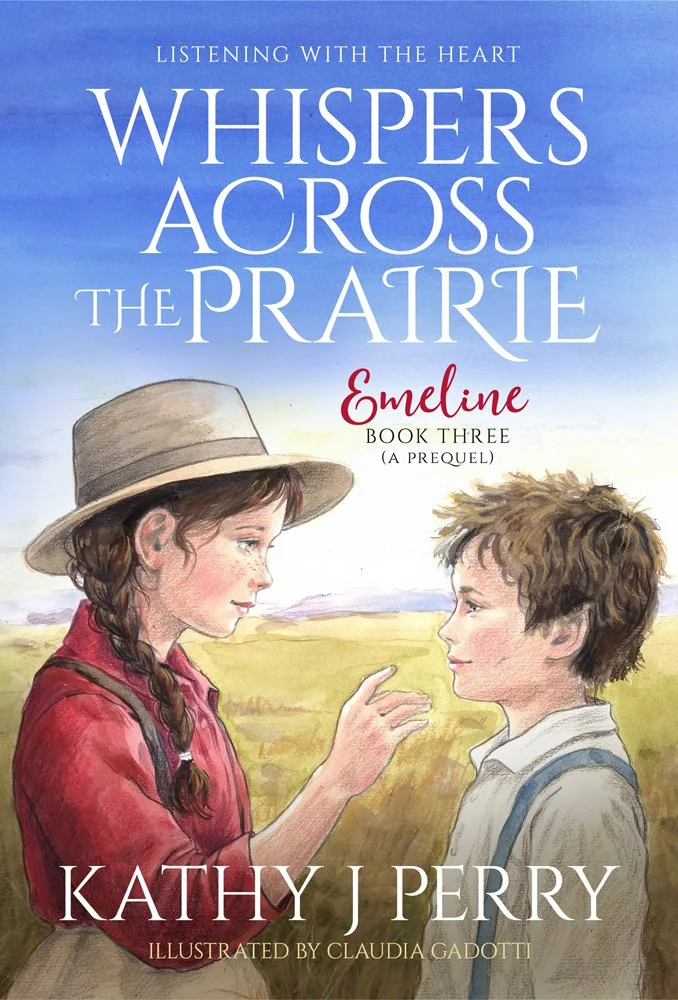
Whispers Across the Prairie

Listening with the Heart

A Free Homeschool Mini Unit Study

Recommended Ages: 8–12
Suggested Length: 1–2 weeks
Subjects Integrated:
Language Arts • American History • Character & Empathy • Creative Expression

Welcome to the Prairie

Thank you for choosing Whispers Across the Prairie for your homeschool. This gentle, story-based unit study is designed to help children slow down, think deeply, and grow in understanding—both of the past and of one another.

This guide is intentionally flexible. Use what fits your family. Skip what doesn’t. There is no “right” pace—only meaningful conversation and connection.

About the Story

Whispers Across the Prairie follows ten-year-old Emeline O’Connor as she navigates life on a Missouri homestead in the late 1800s. As Emeline learns responsibility and faces the consequences of her choices, she also begins to understand that listening involves more than simply hearing words.

Setting

  • Rural Missouri

  • Late 19th century (1880s)

  • Pioneer homestead life

Core Themes

  • Responsibility

  • Courage

  • Empathy

  • Patience

  • Growth through mistakes

  • Listening beyond words

Learning Goals

By using this mini unit study, students will:

  • Practice reading comprehension and thoughtful discussion

  • Learn about daily life on an American homestead

  • Explore character growth and decision-making

  • Develop empathy and respect for differences

  • Express ideas through writing and creative activities

Discussion & Reflection

Use these questions for conversation or written response. There are no wrong answers—allow your child to think aloud and explore ideas freely.

Big-Picture Questions

  • What kind of person is Emeline at the beginning of the story?

  • What mistakes does she make? Why?

  • How do her experiences change the way she sees others?

  • What does it mean to “listen with your heart”?

Deeper Reflection

  • Why is it sometimes hard to admit we’re wrong?

  • Can someone communicate without speaking?

  • What helps you understand someone who is different from you?

Writing Connection

Choose one or two of the following:

✏️ Journal Prompt

Write about a time you misunderstood someone. What happened? What did you learn afterward?

✏️ Creative Writing

Write a short scene where two characters must communicate without using spoken words.

✏️ Perspective Writing

Write a paragraph from Emeline’s point of view after she realizes she has made a mistake.

History Snapshot: Life on an 1880s Homestead

Children in the late 1800s often helped with:

  • Feeding animals

  • Collecting eggs

  • Gardening

  • Fetching water

  • Sewing or mending

  • Helping younger children

Activity

Make a simple list:

  • Emeline’s daily chores

  • Your daily responsibilities

Talk about:

  • What is similar?

  • What is different?

  • Which would be harder? Why?

Hands-On Extension

Choose one simple activity:

  • Sketch or draw a prairie scene from the book

  • Build a small “homestead” using blocks or recycled materials

  • Spend ten minutes outdoors observing quietly, then write or draw what you noticed

  • Try a pioneer-style task (kneading dough, simple sewing, gardening)

Encourage observation and reflection rather than perfection.

Sample Weekly Plan (Flexible)

Option A: One-Week Overview

  • Day 1: Read and discuss setting

  • Day 2: Read and discuss characters

  • Day 3: Writing activity

  • Day 4: History snapshot + hands-on activity

  • Day 5: Reflection discussion

Option B: Two-Week Gentle Pace

  • Read a few chapters each day

  • Spread discussions and activities across two weeks

  • Allow time for quiet reflection

Where to Go Next

If your family enjoyed this mini unit study, you may wish to explore the expanded Homeschool Unit Study, which includes:

  • Chapter-by-chapter discussion questions

  • Multi-week lesson plans

  • Printable worksheets

  • Additional writing assignments

  • Creative and hands-on projects

  • Co-op friendly options

Thank you for sharing this story with your family. May it spark meaningful conversations—and gentle growth—around your table.

🌱 Final Note for Parents

Growth often begins with mistakes. This story invites children to see mistakes not as failures, but as invitations to learn, listen, and become kinder.